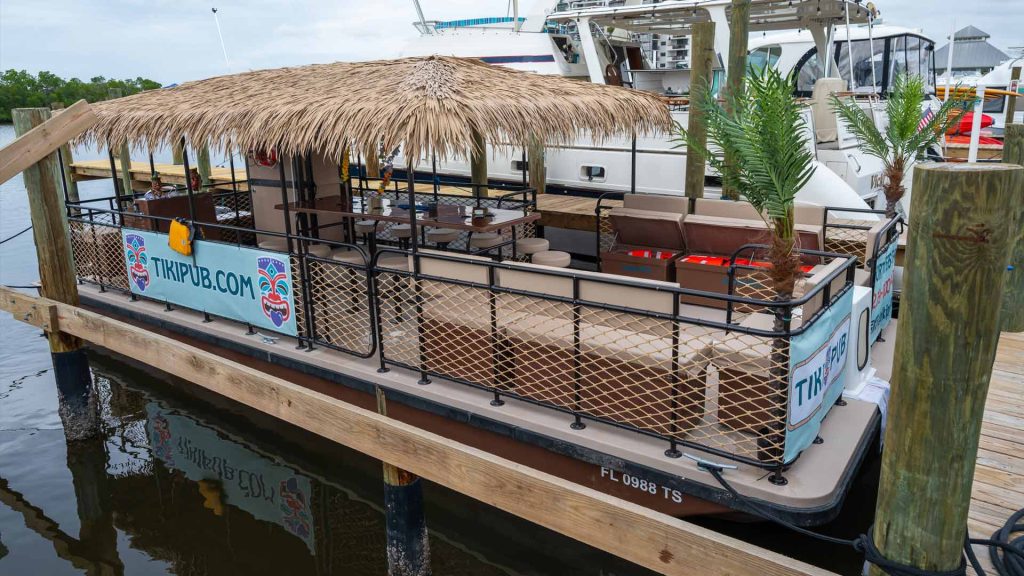
If you are in the commercial boat entertainment business, or thinking about getting in, you have probably been watching the cycle boat trend with a mix of curiosity and skepticism. Traditional charter boats and party boats have been the default for decades. They work. People know what to expect. So why are operators across the country adding cycle boats to their fleet, and in some cases, replacing traditional vessels entirely?
The short answer: cycle boats make more money per trip, create better customer experiences, and generate the kind of word-of-mouth marketing that no advertising budget can buy. But the full picture is more nuanced than that, and the right choice depends on your market, your customers, and your business goals.
The Fundamental Difference: Passive vs. Active Experience
On a traditional party boat, passengers are exactly that. Passengers. They board, they sit, they enjoy the view, they drink. It is pleasant. It is relaxing. And for a lot of customers, that is exactly what they want.
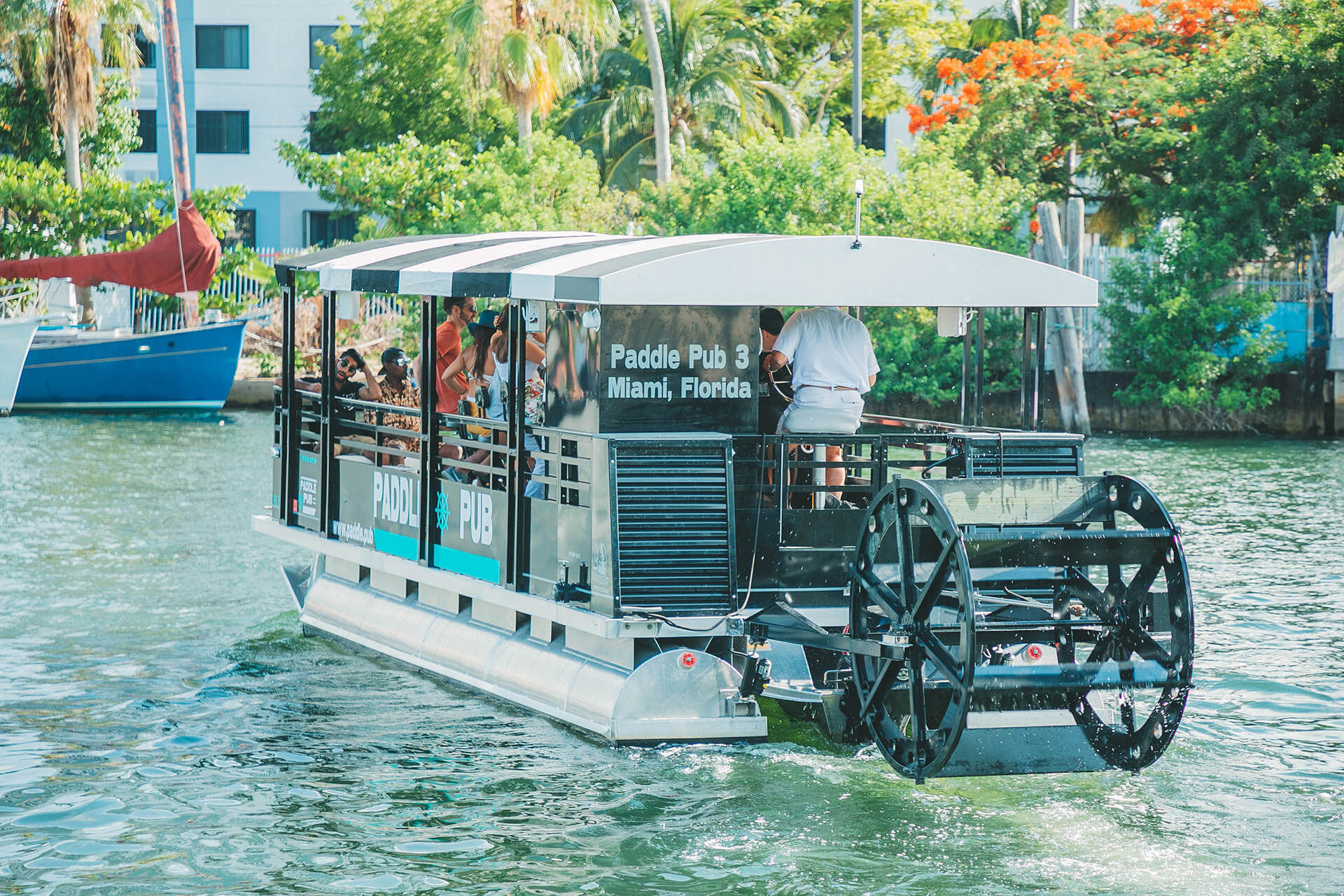
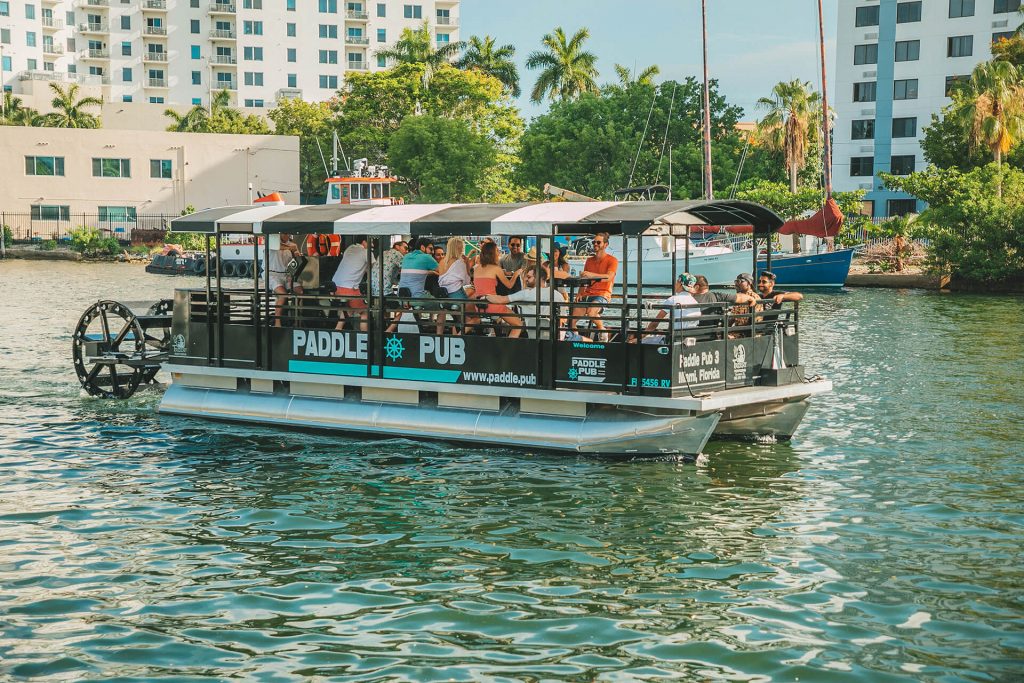
A cycle boat flips the script. Passengers become participants. They are pedaling the boat. They are part of the propulsion system. That might sound like a minor distinction, but it changes the entire dynamic of the experience. Suddenly, a group of strangers is a team. There is something to do besides stare at each other. The introvert who usually hides in the corner at parties is focused on pedaling and naturally starts chatting with the person next to them. The energy on a cycle boat is categorically different from a traditional charter, and that energy is what drives the reviews, the social media posts, and the rebookings.
Revenue Comparison: The Numbers Might Surprise You
Let us compare apples to apples. Take a traditional 30-passenger party boat running a 2-hour cruise at $45 per person. That is $1,350 per trip at capacity. A cycle boat carrying 16 passengers at $55 per person generates $880. On raw numbers, the bigger boat wins, right?
Not so fast. Here is where it gets interesting:
- Booking rates. Cycle boats consistently book at 85 to 95% capacity because groups tend to fill all seats. Traditional party boats often run at 60 to 70% on non-private charters. That $1,350 theoretical max is more like $900 in practice.
- Tour frequency. Cycle boats typically run shorter, more frequent trips (60 to 90 minutes vs. 2 to 3 hours). You can fit 5 to 6 cycle boat tours in the same window as 3 traditional cruises. More turns means more daily revenue.
- Fuel costs. Pedal power is free. A traditional party boat burning 8 to 15 gallons per hour adds up fast. Cycle boats with electric assist motors use a fraction of the energy, dramatically lowering your per-trip operating cost.
- Staffing. A cycle boat typically needs one captain or guide. A traditional party boat may need a captain, a deckhand, and possibly a bartender. Fewer crew per trip means higher margins.
- Pricing power. The novelty factor and active experience of a cycle boat commands a premium. Customers willingly pay $55 to $75 per person for an experience they cannot get anywhere else. A "sunset cruise" on a traditional boat competes on price with every other charter in the harbor.
When you factor in utilization rates, fuel savings, staffing efficiency, and pricing power, a single cycle boat can match or outperform a traditional party boat that costs two to three times as much.
Maintenance: The Hidden Cost Advantage
Anyone who has owned a traditional inboard or outboard motor boat knows the drill. Winterization, impeller replacements, oil changes, outdrive service, and the occasional "why is the engine making that noise" panic at the worst possible time. Marine engine maintenance is expensive and unavoidable.
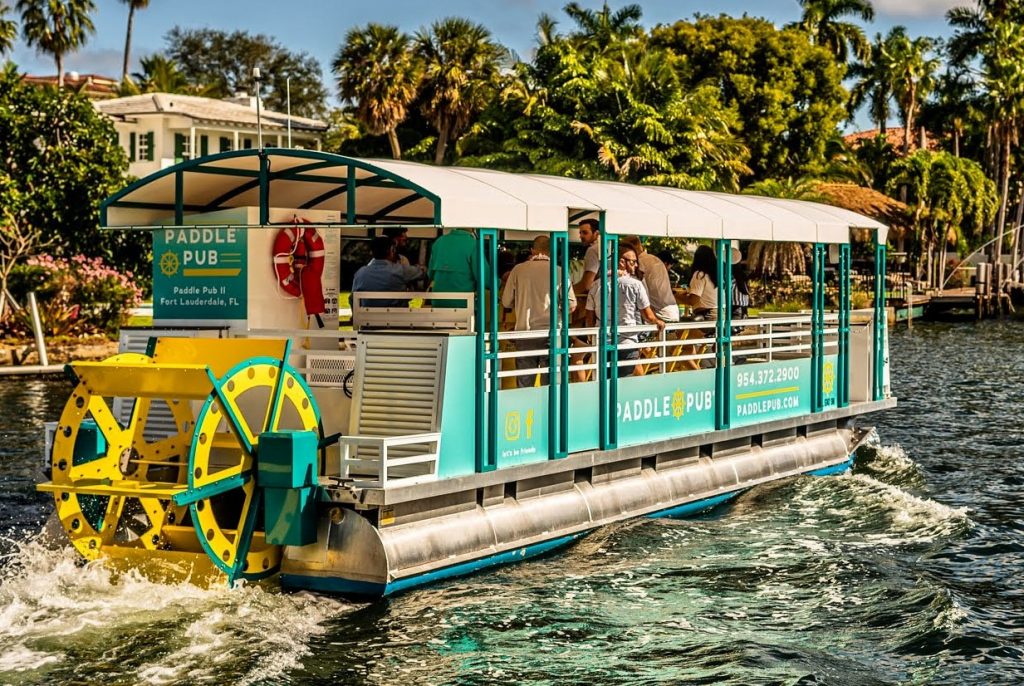
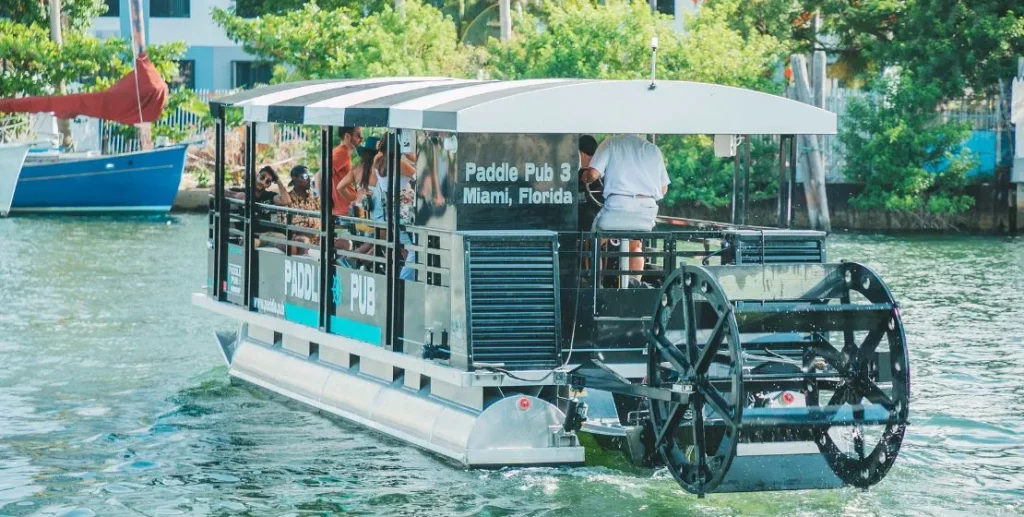
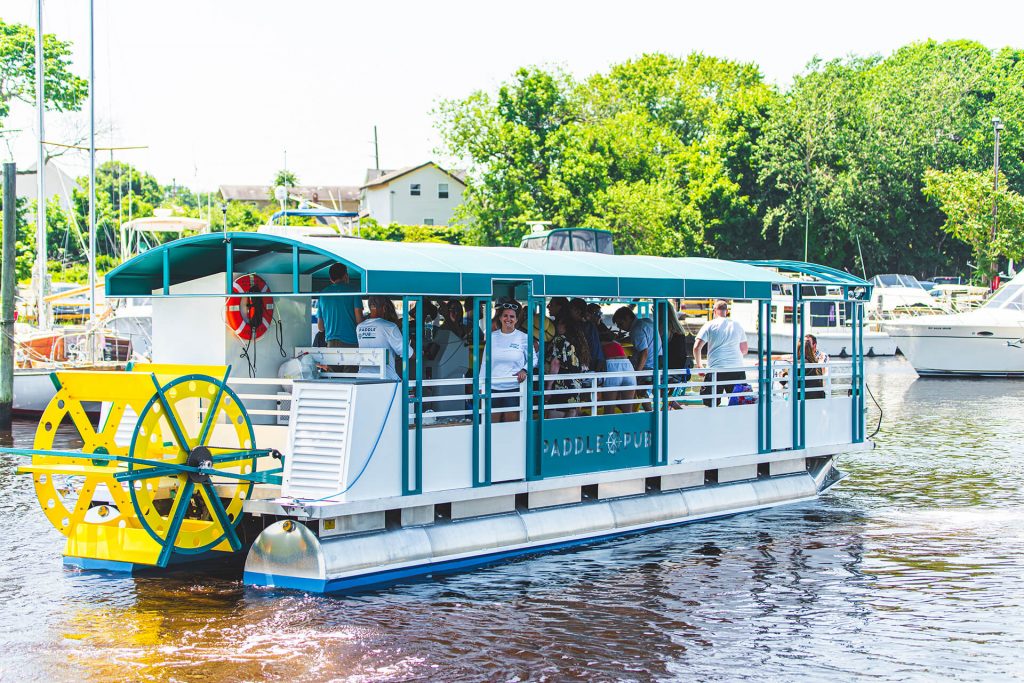
Cycle boats, especially those with pedal-drive systems and small electric assist motors, have a fraction of the mechanical complexity. The pedal mechanisms use bicycle-style components that any competent mechanic can service. The electric motor (if equipped) has minimal moving parts. Our aluminum hull construction means no gelcoat to maintain, no fiberglass blisters to repair, and no wood to rot.
Several operators have told us their annual maintenance costs on a cycle boat are 60 to 70% lower than what they were spending on comparable traditional vessels. That is not pocket change. That is thousands of dollars staying in your pocket every year.
Where Traditional Boats Still Win
Let us be fair. There are scenarios where a traditional party boat or charter vessel is the better choice:
- Open water operations. Cycle boats are designed for calm, protected waterways like rivers, lakes, harbors, and intracoastal waterways. If your market is open ocean or rough water, a traditional vessel with a proper hull design is the right tool.
- Large group capacity. If your market demands 40, 60, or 100+ passengers per trip, a traditional vessel is the only option. Cycle boats top out around 20 passengers for practical reasons.
- Luxury positioning. If your brand is champagne and white tablecloths, a traditional yacht-style charter is the better fit. Cycle boats are energetic and social, not upscale and serene.
- Older demographics. While cycle boats attract a surprisingly broad age range, some older clientele prefer not to pedal. If your market skews heavily 65+, a traditional vessel may be more appropriate.
The Fleet Strategy: Why Not Both?
More and more operators are discovering that the smartest move is not choosing one or the other. It is offering both. A mixed fleet lets you serve different customer segments, fill different time slots, and hedge against market shifts. Run cycle boats for the high-energy daytime tours and bachelor/bachelorette parties. Run the traditional vessel for sunset dinner cruises and corporate events that want a more refined atmosphere.
The operators who are growing fastest right now are the ones who started with one cycle boat, proved the concept in their market, and then expanded. They added more cycle boats, tiki boats, or traditional vessels based on what their specific customer base demands. Start with the boat that best fits your primary market, generate cash flow, and expand from there.
TourCraft manufactures both cycle boats and tiki boats for commercial operators. Our Cycleboat 32 and Neptune 16 are USCG-certified and built with marine-grade aluminum for years of daily commercial use. Contact us to discuss which vessel fits your market.
Contact UsTourCraft Team
Commercial Boat Manufacturer